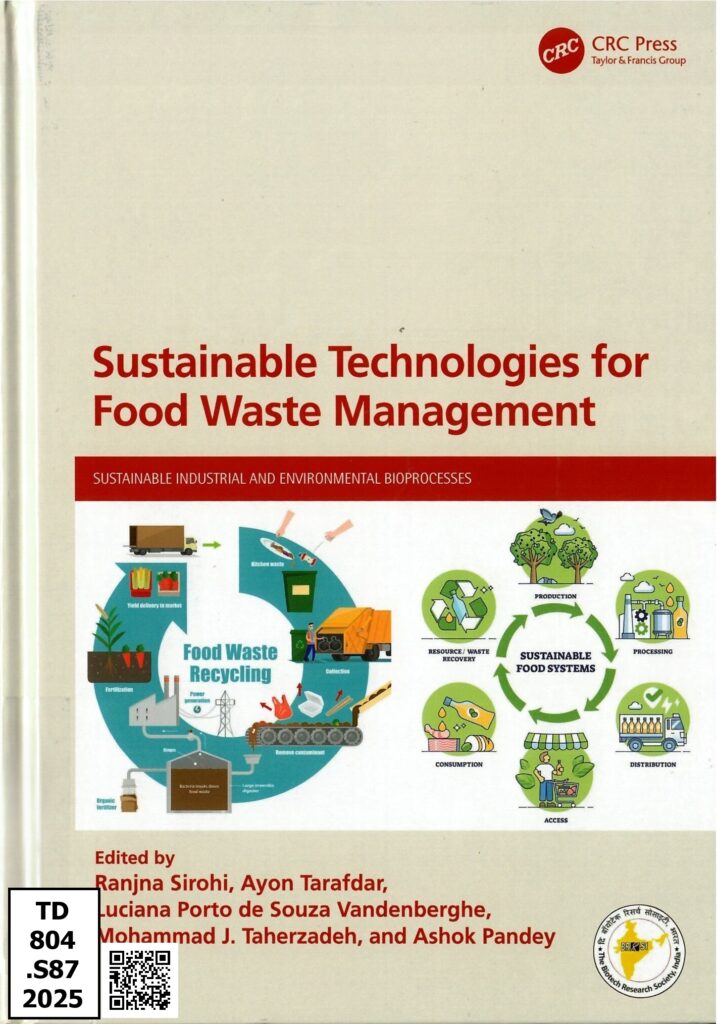
Description of the book:
- Introduction and Scope
- The book begins by framing the global challenge of food waste, explaining the scale of the problem and why sustainable management is crucial. It introduces the reader to key concepts such as waste characterization and the broader environmental, social, and economic implications of food waste.
- Advanced Characterization Techniques
- Early chapters focus on methods to accurately identify and categorize types of food waste. These advanced analytical techniques help stakeholders understand composition patterns, enabling targeted reduction strategies and more efficient downstream processing.
- Conversion to Valuable Resources
- A major theme of the book is transforming food waste into valuable outputs. It covers thermo-chemical and biological conversion processes that produce biohydrogen, biogas, biopolymers, organic acids, biochar, compost, and vermicompost — offering pathways from waste toward energy, materials, and soil enhancers.
- Technology Integration for Sustainability
- The book highlights how cutting-edge technologies — including machine learning, the Internet of Things (IoT), sensors, and robotics — are being applied to optimize food waste treatment systems. These tools improve efficiency, monitoring, and decision-making in sustainable food waste management operations.
- Policy, Systems, and Implementation
- Beyond technical processes, the book discusses the food waste supply chain, relevant policies, and systemic approaches for adoption by researchers, practitioners, and policymakers. It underscores integrated strategies that connect technology, regulation, and management practices for environmentally responsible food waste solutions.